

Upcoming dates
This 2-day course has been updated based on over a decade's work with global brands and government agencies. We've also used feedback from thousands of students who've completed our training.
You'll learn to design content for multi-step user journeys across different touchpoints. And learn from experienced practitioners and earn a professional certificate. The course is taught online and streamed live from Australia.
Our curriculum now integrates advanced GenAI. You'll learn how to use GenAI tools for research analysis, journey mapping and testing.
Who should take this course
This course is for professionals with 12 to 18 months of content design experience. You might be a:
- Graduate of our Content design: fundamentals course
- Content designer ready for more complex projects
- UX writer moving into content design
- Content manager needing design techniques
- Communication manager working on products
- Content strategist wanting hands-on practice
What makes this course different
Learn from experienced content designers
Your trainers are experienced content designers working on live projects. They bring advanced insights and current industry experience directly into the classroom.
Intensive format that gets results
Our 2-day focused approach uses live instruction and immediate feedback. You'll be promotion-ready faster—no months of video lessons to work through alone.
Create a portfolio piece
Working alongside other learners in small groups, you'll have expert support throughout. You'll complete the course with a small portfolio piece that shows your new skills.
Learn to work with complexity
You'll put concepts into practice by working on realistic multi-step user journeys. The exercises throughout the course reflect real content design tasks and challenges.
Include GenAI in your toolkit
Learn to use GenAI tools for advanced content design workflows. It's a skill that's increasingly valuable in today's competitive job market.
What you'll learn and build
Day 1: Advanced research and strategy
Work in agile environments
Understand how to work in product teams using agile methods.
Analyse complex research
Identify language patterns and user needs from detailed interview transcripts.
Synthesise strategic insights
Turn research findings into clear recommendations for content decisions.
Identify needs and map user journeys
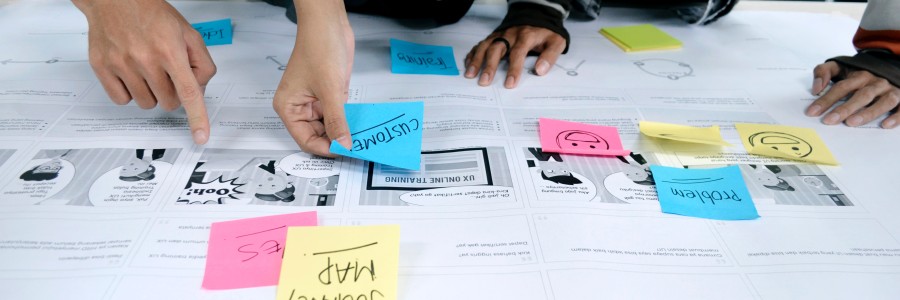
Create detailed journey maps showing opportunities and pain points across touchpoints.
Design for complexity
Develop content that works for multiple user needs.
Present to stakeholders
Share your ideas and rationale with others for feedback.
Day 2: Systematic content creation and optimisation
Build scalable systems
Create reusable content patterns and components.
Carry out testing
Run content tests with realistic scenarios and interpret results.
Iterate on the design
Improve content based on feedback using structured methods.
Measure performance
Identify metrics for ongoing content measurement.
Lead stakeholder presentations
Present content solutions with business rationale.
Course details
- Format: Live online through Zoom
- Schedule: 9:30 am to 4:00 pm (Melbourne time) both days
- Group size: Maximum 16 participants
- Certificate: Professional certificate upon completion
What you'll need:
- Reliable internet and webcam
- Access to Google Docs or Microsoft Office
- Access to Zoom
- Optional: Access to a text-based GenAI tool
Upcoming dates
Trainers for this course

Lorien Kaye has a long history in writing and editing, previously in the book industry, now as a content designer for Weave. She has taught Content Design London's courses since 2019, training hundreds of content designers.

McGee Noble has worked as the senior manager for content for ANZ, and has worked with many brands and government organisations to help them make content that meets user needs and business needs.

Angus Gordon has worked in digital content for more than 15 years. As a content strategist and designer, he helps organisations produce and manage well-structured, findable, usable content.

Emma Kelson helps organisations create digital experiences that effectively meet both business goals and user needs. She excels at conducting user research, employing data-driven insights and applying systems thinking in her design approach.
